Faber Chimney Oil Dripping? 7 Common Causes and Solutions
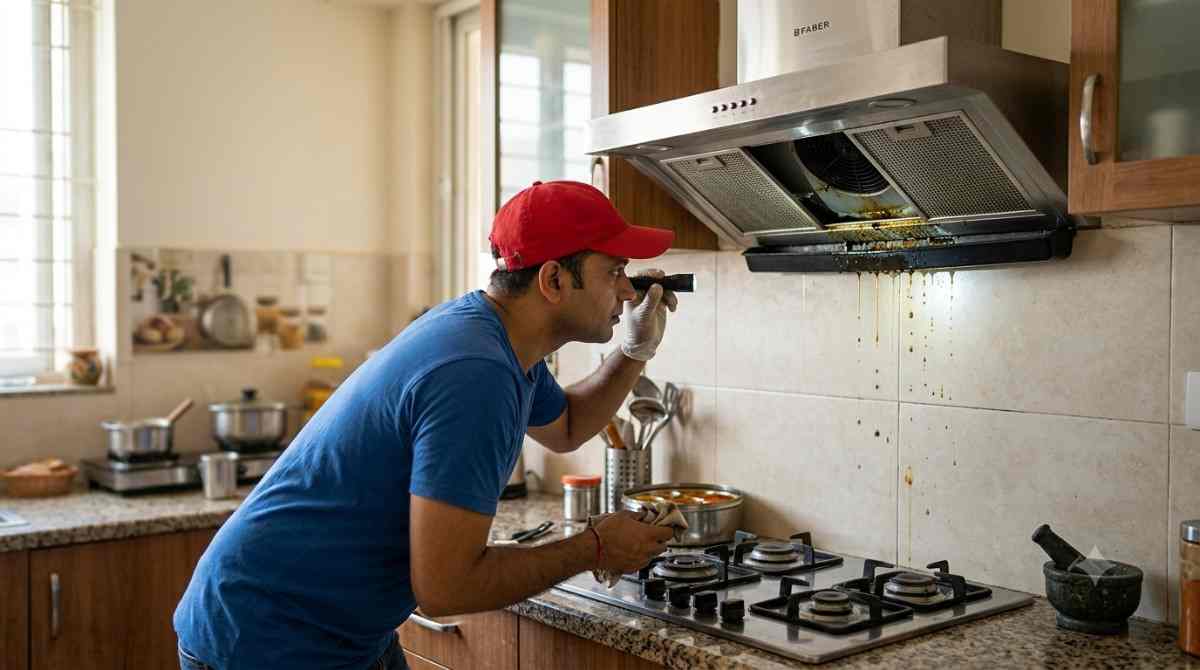
You finish cooking and later find a sticky drop of oil on your hob or countertop. If you have noticed Faber chimney oil dripping in your kitchen, you are not alone. Indian cooking involves a lot of frying and tadka, so grease builds up inside a chimney faster than most people expect.
A few drops may look harmless, but they should not be ignored. Dripping oil makes the hob area slippery and messy, and heavy grease can strain the motor and reduce suction over time. This guide covers seven common causes of chimney oil leakage, a safe basic check for each, and the usual solution. The exact cause depends on your chimney model and a proper inspection, so treat this as general guidance, not a diagnosis.
Why Is Your Faber Chimney Dripping Oil?
A kitchen chimney pulls in oily vapour, and the filter traps most of the grease. That grease is meant to collect in a set place, such as an oil collector cup or tray, depending on the model. When something interrupts this path, the oil finds another way out and drips.
Not every chimney is built the same way. Some have a detachable oil collector, some a tray, and some may have a drain arrangement. Check your user manual to see what your model has.
Before any check below: switch off the chimney and the power supply, let it cool, and follow the manufacturer's instructions. Never open electrical parts or touch internal wiring yourself.
7 Common Causes and Solutions
1. Full or overflowing oil collector
Possible reason: If you cook with oil daily, the collector can fill up within weeks. A chimney oil collector that is full spills grease over the sides, and it is one of the most frequent causes of dripping.
Safe basic check: With the chimney off, see whether the collector is full, cracked or sitting at an angle.
Solution: Remove it as shown in your manual, empty the oil into a disposable container, wash with warm water and dishwashing liquid, dry fully and refit it firmly.
2. Grease-clogged chimney filters
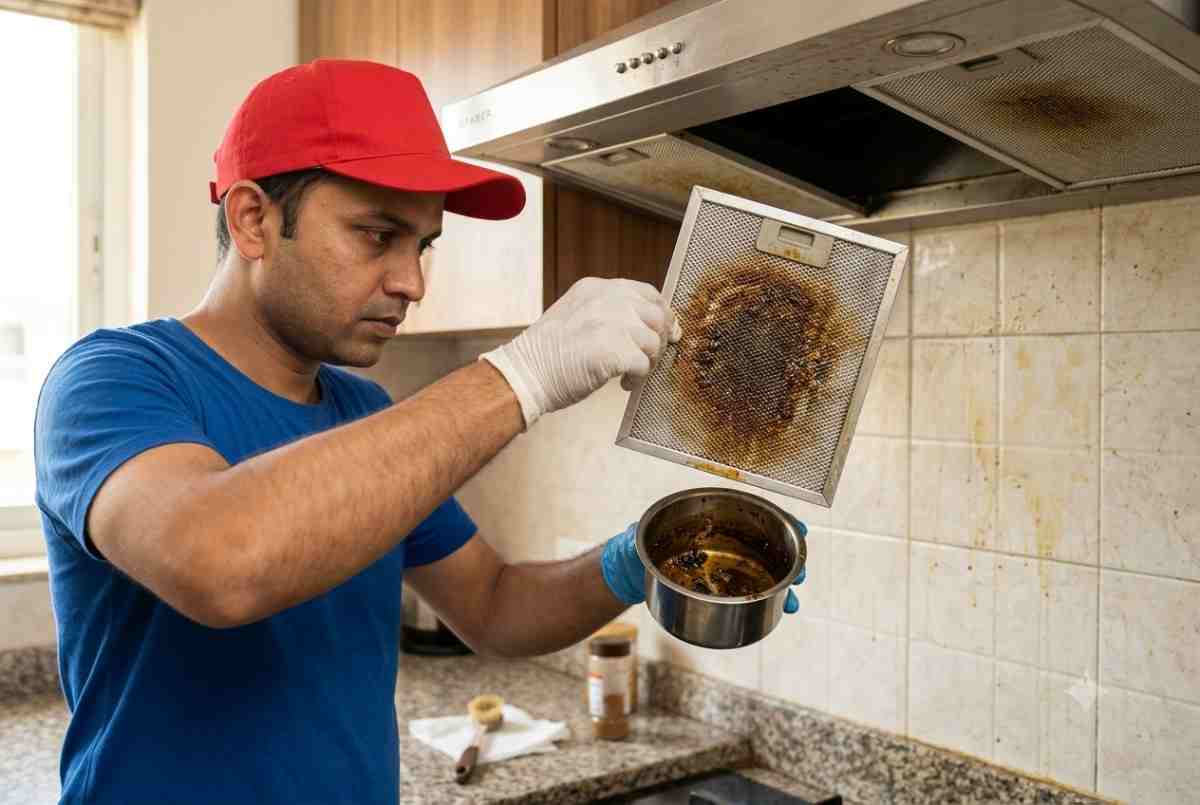
Possible reason: When filters are blocked with grease, oil cannot flow towards the collection area. It may pool on the filter and drip from the edges.
Safe basic check: Remove the filter as per your manual. A heavy, sticky or dark-coated filter needs cleaning.
Solution: Regular chimney grease filter cleaning helps a lot. Soak the filter in hot water with a degreasing liquid, scrub gently with a soft brush, rinse and dry completely before refitting. Some filters, such as charcoal types, are not washable and need replacement as per the manufacturer's guidance.
3. Heavy grease accumulation inside the chimney
Possible reason: Over months, thick grease can build up on the inner body and near the edges. Warm grease turns liquid and slowly drips down.
Safe basic check: Wipe the visible inner edges and underside with a cloth. If it comes away very oily, grease has built up.
Solution: Clean accessible surfaces with a damp cloth and mild degreaser, and never spray liquid near the motor or switches. For deep build-up, our chimney repair service page explains what a technician visit involves.
4. Blocked or poorly maintained drainage areas (where applicable)
Possible reason: Some models have a channel or outlet that carries oil to the collector. If hardened grease blocks it, oil can back up and leak. Many chimneys do not have this arrangement, so this applies only if yours does.
Safe basic check: Look in your manual for a drain or channel, and check its outlet for hardened grease.
Solution: Gently clear visible grease from accessible areas after warming it with a hot, damp cloth. Do not push sharp objects inside. If you cannot reach the blockage safely, ask a technician.
5. Incorrect installation or chimney alignment
Possible reason: If the chimney is not level or leans away from the collector, oil may flow to the wrong side. This can follow a poor installation or a shifted mounting.
Safe basic check: Look at the chimney from the front and side. Does it look tilted, and does oil always drip from the same corner?
Solution: Re-levelling means adjusting the wall mounting, which a technician should do. Do not loosen the wall brackets yourself.
6. Damaged, loose or improperly fitted components
Possible reason: A cracked collector, worn seal or loose filter frame can leave gaps for oil to escape.
Safe basic check: With the chimney off, check that the collector, filter and panels sit snugly, and look for cracks or missing clips.
Solution: Refit parts as per the manual. Replace damaged parts with compatible ones. Tape or glue will not hold against heat and grease.
7. Lack of regular cleaning and maintenance
Possible reason: Most causes above come back to one thing: cleaning is done too rarely, so collectors fill up and filters clog.
Safe basic check: Recall when you last cleaned the filters and collector. If it was several months ago, that is a likely factor.
Solution: Follow a simple routine (see below). Good kitchen chimney maintenance is easier and cheaper than repairing a heavily clogged unit.
How to Prevent Chimney Oil Dripping
Most cases of Faber chimney oil dripping can be reduced with a few simple habits:
- Empty the oil collector regularly, every week or two if you cook with a lot of oil.
- Clean the grease filters on schedule, more often if you fry frequently. Follow your manual.
- Switch the chimney on before cooking and keep it running a few minutes after.
- Wipe accessible surfaces with a damp cloth every few weeks.
- Refit parts properly after every cleaning.
- Plan a periodic professional service if the chimney is used daily and has never been serviced.
Our chimney maintenance FAQs cover more common questions, and your user manual remains the best reference for your model.
When Should You Call a Chimney Repair Technician?
Basic cleaning solves many cases, but if Faber chimney oil dripping continues, call a technician in these situations:
- Oil keeps dripping after you clean the collector and filters.
- Parts are cracked, broken or missing.
- The chimney is tilted, loose on the wall or vibrating.
- You notice sparks, a burning smell, or the chimney trips the switch.
- You smell gas. Turn off the gas at the cylinder or regulator, ventilate the room and get qualified help straight away.
Do not open the motor, control panel or wiring to look for the cause. That is a job for a qualified technician.
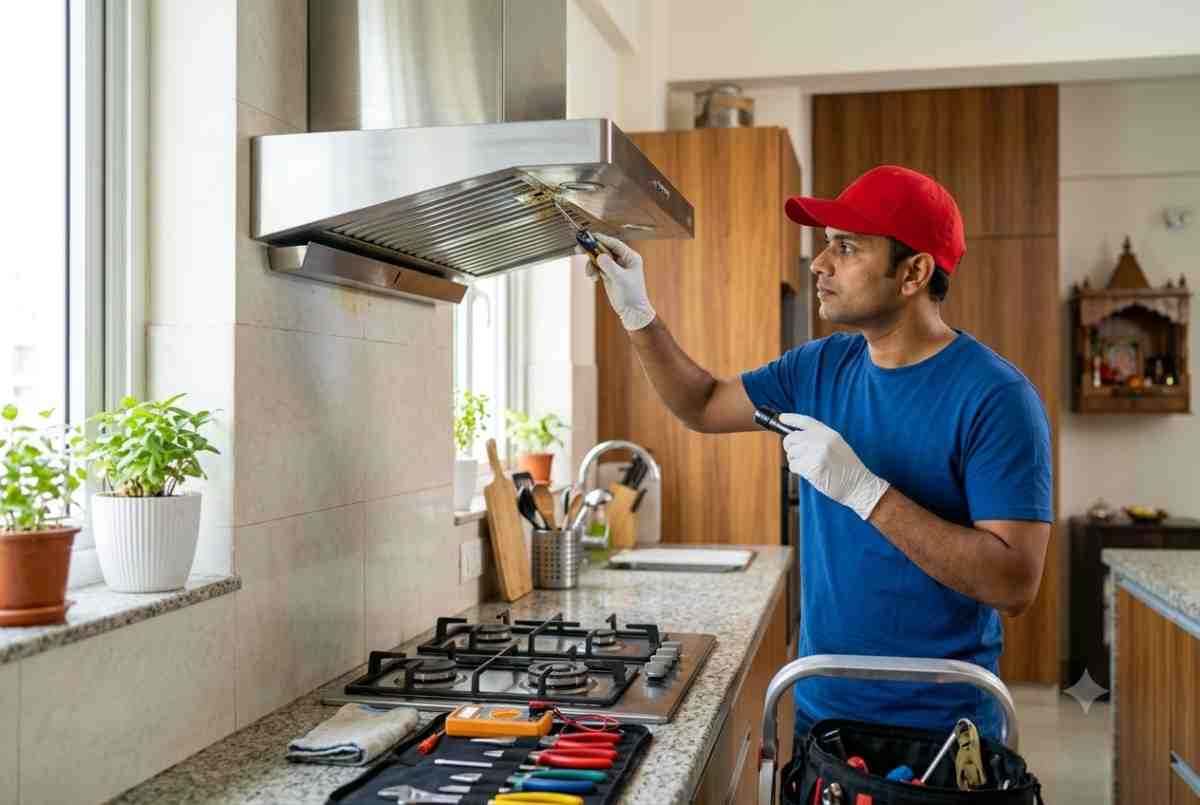
You can read more about kitchen chimney repair at home or browse general appliance repair information on our website. Faber Appliance Repair is an independent repair service. We are not an authorised Faber service centre and are not affiliated with the manufacturer. If your chimney is under manufacturer warranty, check the warranty terms before getting third-party work done.
Frequently Asked Questions
1. Why is my Faber chimney dripping oil?
Common reasons include a full oil collector, clogged filters, heavy grease inside the unit, poor alignment, or loose and damaged parts. The exact cause depends on your model and needs an inspection to confirm.
2. How do I clean a chimney oil collector?
Switch off the chimney, remove the collector as shown in your manual, empty the oil into a disposable container and wash it with warm water and dishwashing liquid. Dry it completely and refit it securely. Do not pour the oil down the sink.
3. Can a clogged chimney filter cause oil leakage?
Yes. A filter blocked with grease can stop oil from flowing to the collection area, so it may overflow or drip from the edges. Regular cleaning or replacement, as per your model, usually helps.
4. How often should I clean my kitchen chimney?
It depends on how much you cook and fry. Many households clean the filters every few weeks to every couple of months and empty the oil collector more often. Your user manual gives the best guidance for your model.
5. When should I book professional chimney repair?
Book it if oil keeps dripping after cleaning, if parts are damaged, if the chimney is loose or tilted, or if you notice any electrical or gas-related concern.
Conclusion: Fixing Faber Chimney Oil Dripping
Faber chimney oil dripping usually means grease is not flowing or collecting as it should. A full oil collector, clogged filters and irregular cleaning are common causes, while alignment problems and damaged parts need a technician. Always switch off the chimney first, follow the manufacturer's instructions, and leave electrical and gas-related issues to qualified people.
Experiencing oil dripping from your kitchen chimney? Contact our repair team to enquire about repair assistance and service availability in your area.
Call: 1800 210 2966
WhatsApp: 8104268556