
A cooking range is the heart of an Indian kitchen, so when it stops working in the middle of meal prep, it throws off the whole day. If your Faber cooking range is not working, you may notice a burner that will not light, a clicking sound with no flame, a knob that feels stuck, or a flame that looks weak or uneven.
These symptoms can have very different causes, from a clogged burner part to a power or gas supply issue. Some are simple to rule out. Others need a trained technician to diagnose safely. This guide explains the common causes and what you can check yourself without taking any risks.
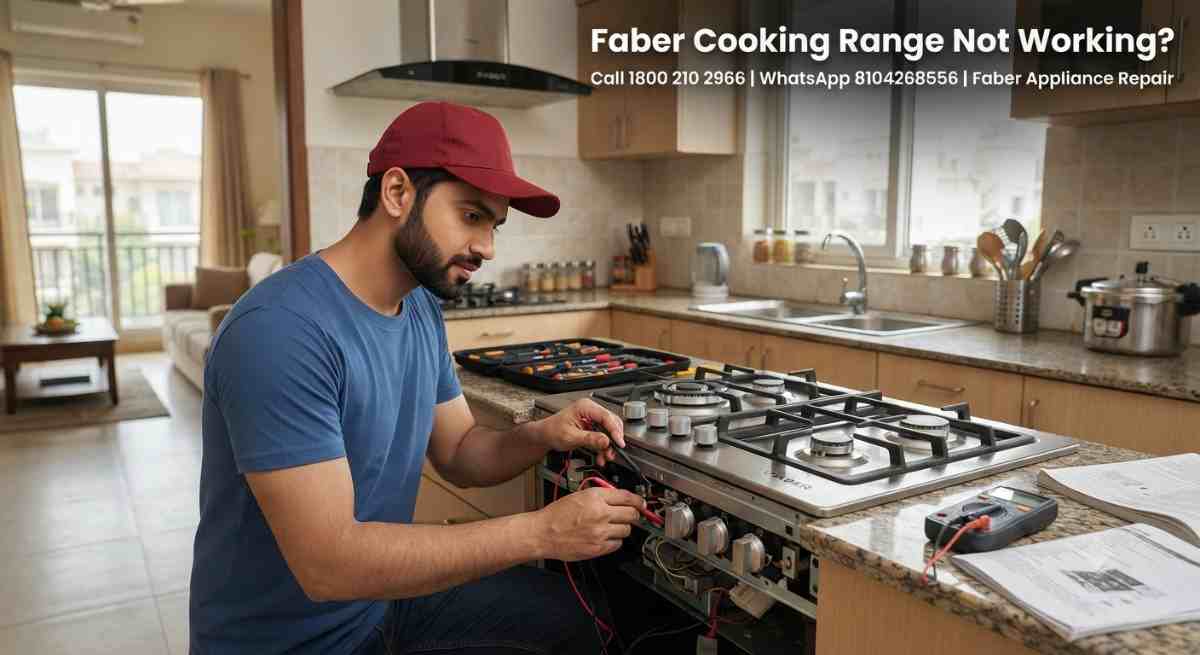
Why Is My Faber Cooking Range Not Working?
A cooking range combines several parts: burners, an ignition system, control knobs, a gas connection and, in many kitchens, an electrical supply for the spark. A problem in any one of them can make the range seem completely dead.
The most common reasons are:
- Food spills or oil residue blocking the burner or ignition area
- Moisture or dirt around the spark point
- Worn or loose control knobs
- Low or interrupted gas supply
- Power issues affecting electronic ignition
- General wear from years of daily use
Because the symptoms overlap, a proper inspection is often the only reliable way to find the real fault. Let us look at each problem in turn.
1. Ignition Is Not Working
An ignition problem is one of the most common complaints. You turn the knob, but there is no spark, or there is a clicking sound and no flame.
Possible reasons
- Dirt or moisture near the ignition point: Spilled milk, dal or oil can coat the spark area and weaken the spark. Moisture after cleaning can do the same.
- Battery or power problem: Some ranges rely on a battery or mains supply for the spark.
- Worn ignition parts: With heavy daily use, ignition components can wear out over time.
What you can safely check
- Make sure the area around the burner is clean and fully dry.
- If your model uses a battery, check whether it needs replacing, as described in your user manual.
- Confirm the range is properly plugged in, if it has a power connection.
2. Burner Is Not Igniting
Sometimes the ignition clicks normally, but one burner stays dark while the others work. That points to a burner-related issue rather than a full ignition failure.
- Clogged burner ports: The small holes around the burner head can get blocked by food particles or grease, restricting gas flow.
- Burner cap not seated properly: If the cap or head is slightly out of place after cleaning, the flame may not light or may burn unevenly.
- Wet burner parts: Water trapped in the burner after washing can prevent lighting for a while.
Check that the burner cap sits flat and is dry. If one burner still will not light, it is better to have it inspected than to poke at the ports with sharp objects, which can damage the burner.
3. Flame Is Weak or Uneven
A healthy flame burns steadily and evenly around the burner. If you see a yellow, lazy or patchy flame, something is affecting how gas and air mix.
- Partially blocked burner ports
- Dirt or residue inside the burner
- Improper placement of the burner parts
- A supply issue, such as a cylinder nearing empty or a regulator problem
An uneven flame is not just inconvenient. It can waste gas, blacken your vessels and, in some cases, signal incomplete combustion. Adjusting gas-related parts is not a do-it-yourself job, so if cleaning and correct placement do not fix the flame, get it checked by a technician.
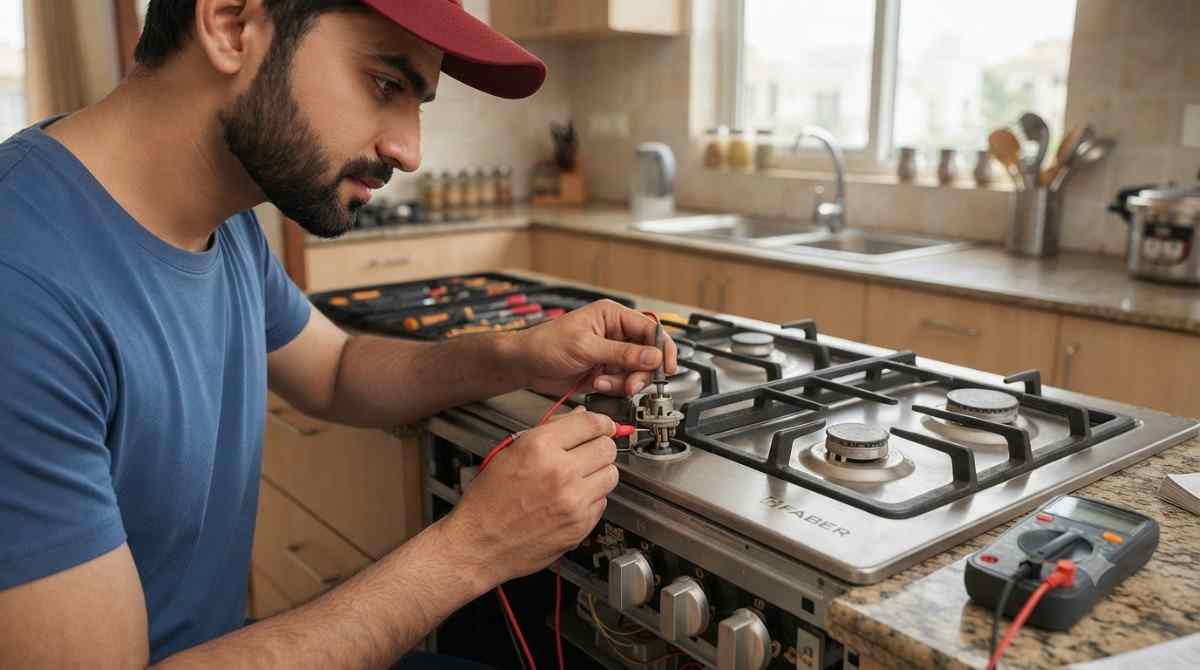
4. Cooking Range Knob Is Not Working
A knob problem usually shows up as one of these:
- The knob feels very stiff or very loose
- It turns, but the burner does not respond
- It does not click or spring back as it normally does
- It does not stay in position
Over time, heat, grease and daily use can affect the knob and the valve behind it. Dried spills can also make a knob stiff. Do not force a stuck knob. Forcing it can damage the valve and create a gas safety concern. If a knob feels abnormal, stop using that burner and have it looked at.
5. Gas Supply or Connection Issue
Sometimes the range itself is fine and the problem lies upstream. A gas supply issue can make every burner weak or stop them lighting altogether.
- The LPG cylinder may be empty or nearly empty.
- The regulator or gas valve may not be fully open.
- The pipe may be bent, pinched or worn.
- For piped gas, there may be a supply interruption in your area.
Important safety note: If you smell gas, do not switch any electrical device on or off and do not light a flame. Turn off the regulator or main valve if it is safe to do so, open doors and windows for ventilation, and contact your gas provider or emergency service. Never try to repair gas lines, hoses or fittings yourself. This needs professional inspection.
For general LPG and gas safety guidance in India, you can refer to the Ministry of Petroleum and Natural Gas.
6. Electrical or Power-Related Problem
Many modern ranges use electric ignition or electronic controls, so a power problem can look like a range fault.
- A loose plug or a socket that is not working
- A tripped switch or MCB in your home
- Voltage fluctuations
- A faulty ignition or control component
If other appliances on the same socket also fail, the issue is likely with the power supply rather than the range. If only the range misbehaves, the fault may be inside the appliance and should be handled by a technician. Never open panels or touch internal wiring.
What Can You Safely Check at Home?
Before booking a visit, a few basic, low-risk checks can save you time:
- Check that the gas cylinder is not empty and the regulator is switched on.
- Confirm the plug and socket are working, if your range uses mains power.
- Switch the range off, let it cool, and wipe visible spills around the burners and knobs.
- Make sure burner caps and heads are dry and placed correctly.
- Check whether the battery needs replacing, if your model uses one.
- Note exactly what is happening, such as "clicking but no flame" or "one burner weak", so you can describe it clearly.
That is as far as home checks should go. Do not dismantle the range, bypass any safety feature, adjust gas parts or handle live electrical components.
When Should You Call a Technician?
Professional diagnosis makes sense when:
- You can smell gas or suspect a leak
- The problem continues after basic checks
- A knob is stuck, damaged or feels unsafe
- The flame stays weak, yellow or uneven even after cleaning
- The ignition fails repeatedly
- You see signs of damage, burning smells or overheating
Early inspection usually costs less than repairing damage caused by prolonged use of a faulty range.
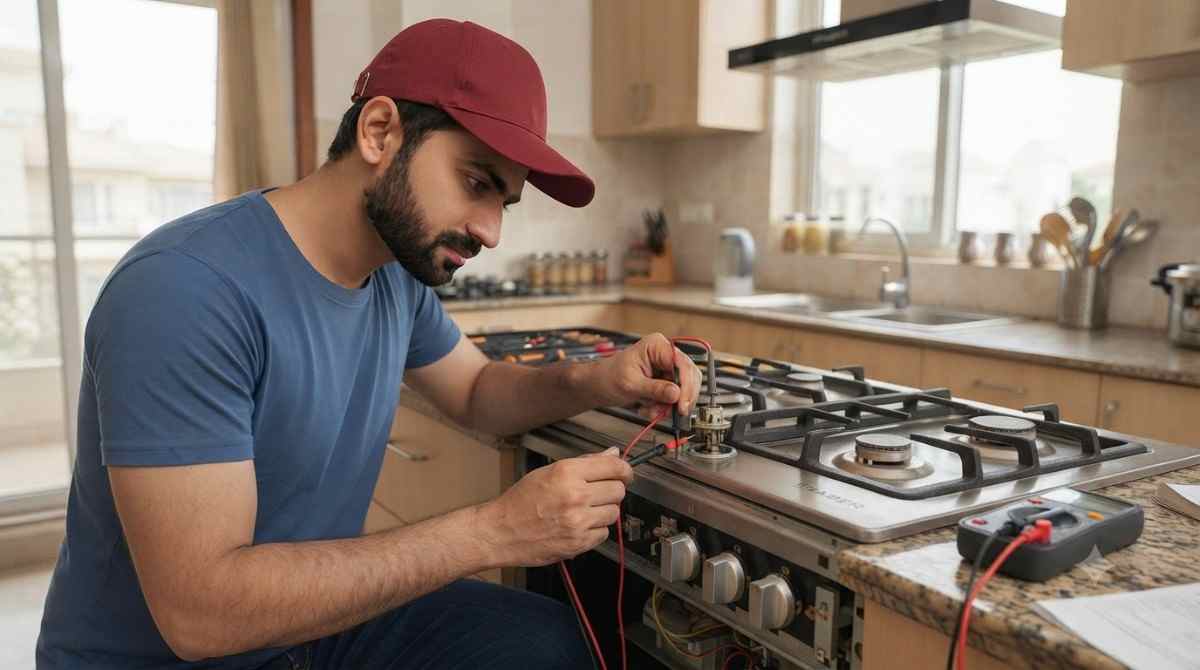
Faber Cooking Range Repair Service
Depending on the fault, a cooking range may need burner servicing, ignition checks, knob or valve inspection, or a closer look at the gas and power connections. Many of these can be handled at home, so you do not need to move the appliance.
If you are looking for Faber cooking range service at home, it helps to describe the fault clearly when you call, such as "one burner not lighting" or "clicking but no flame".
Faber Appliance Repair is an independent repair and service provider that handles Faber kitchen appliances. For range faults, you can read about the Faber Cooking Range Repair Service to see which problems are covered and how a visit works. Availability depends on your location, so it is best to confirm service in your area before booking.
Frequently Asked Questions
Why is my Faber cooking range not working?
Common causes include a blocked burner, dirt or moisture at the ignition point, a stiff knob, a gas supply problem or a power issue. A technician can identify the exact fault.
Why is my Faber cooking range not igniting?
Check for a dry, clean burner area, a working power supply and a gas cylinder that is not empty. If there is still no spark or flame, the ignition parts may need inspection.
Why is one burner not working?
One dead burner usually means clogged ports, a misplaced burner cap, or a fault in that burner's valve or ignition. The other burners working normally suggests the gas and power supply are fine.
Why is the flame uneven?
Blocked burner ports, residue, incorrect burner placement or supply issues can all cause an uneven flame. If cleaning does not help, get it checked rather than adjusting gas parts yourself.
Can I troubleshoot a cooking range at home?
Only basic checks, such as the cylinder, the power socket, dryness and cleanliness around the burners. Do not open the appliance or touch gas or electrical components.
When should I call a cooking range technician?
Call one if you smell gas, if a knob is stuck or damaged, if the flame stays weak or yellow, or if the problem continues after the basic checks. Cooking range repair at home is often possible depending on the fault.
How can I book Faber cooking range repair service?
You can call or WhatsApp Faber Appliance Repair, or use the contact page. For common service questions, the FAQ page may also help.
Need Help With a Faber Cooking Range That Is Not Working?
If your range is still giving trouble after the basic checks, you can contact Faber Appliance Repair to ask about cooking range repair and service availability in your area.
Phone: 1800 210 2966
WhatsApp: 8104268556
Website: https://faberappliancerepair.in/